FDIC-Insured—Backed by the full faith and credit of the U.S. Government

Challenge
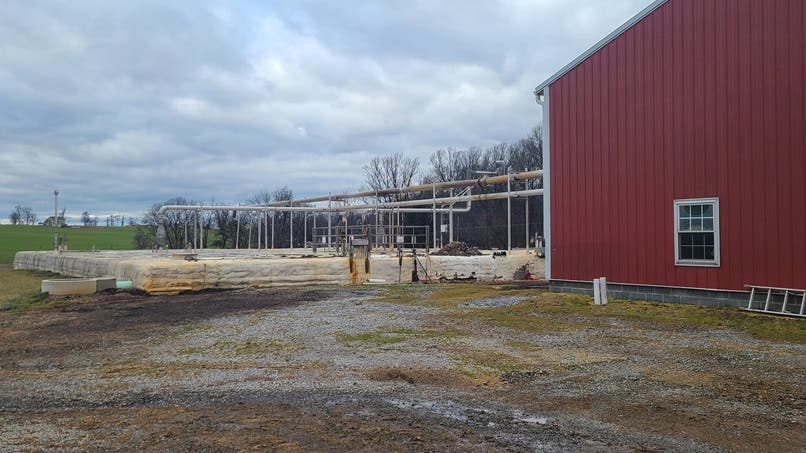
As a second-generation dairy farmer, Duane Hershey had a bold vision for the Ar-Joy Farm. The goal? To turn waste into electricity. To make this dream a reality, Duane needed to install a methane digester in a large pit with cow manure, as well as food waste. As those substances decompose, they produce methane gas, which can then be used to run a generator that creates electricity. A methane digester on a dairy farm helps turn waste into electricity and, potentially, profit. After buying the 140-acre family farm in 2001, Duane and his wife, Marilyn, expanded from 60 to 350 cows and built a new barn and milking parlor. They then started the initial planning for the methane digester, but the multimillion dollar cost was out of reach. And they still needed more cows to make it cost-effective. By 2017, the cow herd had more than doubled, and land that was farmed increased to 600 acres.
Solution
Marilyn and Duane spent five years planning for the build and even worked with the local electric company, which hadn’t yet integrated a manure-based methane digester on the grid. They also assembled a planning team that included a nutrient management specialist, an accountant, a current methane digester owner, and their banker, Lowell Fry with Fulton Bank. Marilyn and Duane were already Fulton Bank customers and had used Fulton Bank’s specialty Agricultural Services division in the past. When they first expanded the farm and needed a new barn, they sought financing. The Hersheys decided to partner with Fulton Bank on the digester because of its understanding of agricultural and planning needs. Together, Marilyn, Duane, and Fulton Bank started the process of turning their dream into a reality. The team worked closely to identify the research investment tax credits and environmental rebates that would enable the couple to put their plan in motion. Through a unique mix of investment tax credits, environmental rebates, some personal cash, and a capital lease, the team was able to finance the project, which totaled more than $3 million. Fulton Bank even purchased some of the tax credits from the project. It is one more example of Fulton Bank’s strong commitment to agriculture. Our team takes pride in helping the Hersheys grow their business and realize their dreams while bettering their community and providing wholesome milk to the world.
Outcome
Today, the farm has 760 cows and is steadily milking them around-the-clock in three shifts. The methane digester generates more than 335KW that can be used on-site or sold to the local energy company. The digester also provides more than 2,100metric tons of carbon credits and renewable energy credits annually for Ar-Joy Farm to sell. The digester also produces two byproducts that can be reused on the farm:
- clean, sterilized solids that can be used for cow bedding or sold for garden medium and
- nutrient-rich water that can be used to replenish the fields that grow corn and other crops for cow feed.
The Ar-Joy Farm is a picture of self-sufficiency and the cycle of life. The cows eat the food; the milk is collected; the manure is processed; the digester produces not only electricity but also the byproducts that go back into supporting the farm; and the process begins again when the cows eat the crops grown on-site. All the while, Duane and Marilyn are reducing the amount of food waste going to landfills and reducing the odor their farm produces, which helps keeps the neighbors happy and helps the farm comply with environmental regulations. Next, Duane and Marilyn are going to install a can crusher so that they can use liquid waste from beverages in the digester and recycle the cans. The Ar-Joy Farm continues its mission of providing for people, cows, and the environment.